We build it before you buy it.
A senior software engineer and an AI engineering team, for the software your business runs on. We do real work before you pay for anything: a working version of what would help most, or a look at your systems with you, on a call or in person. Then you decide.
Got an email from us with a link in it? Here is what it is
Most agencies pitch. We show.
A sales call asks you to imagine the result. We would rather show you, in a working version or in a working session. Three steps; the first two happen before you have paid for anything.
We look
We study a business the way a customer meets it: the website on a phone, the booking flow, the reviews, the systems its people run by hand, using only what the business already publishes. Or you tell us: what you run, what gets in the way, what you have wanted built for years.
We do the work
Before you pay for anything, we do the work that shows what we would do: a working version of what would help most, hosted and labelled as a concept, or, for the systems nobody can see from outside, a working session with David and a written read of what your systems cost you and what we would change.
You decide
If it is worth it, reply. We write the scope with its price, build it, launch it, keep it running, and we are there for the next thing. If not, no hard feelings: the concept comes down, a write-up is yours to keep, and you have seen exactly what we can do.
Almost anything your business would use.
The ones above are five. The first thing we do can just as well be a tool, an app, a connection between two systems, an assistant, a model inside software you already run, a review of what your apps expose, or a report. A few of the shapes it takes:
An internal tool
The spreadsheet your team fights every Monday, replaced by a tool built for exactly that job.
Two systems, connected
What gets retyped between tools by hand, moving on its own: orders, bookings, invoices, records.
An app for your customers
A portal, a booking app, a storefront, a member area: the first screens, working, on a phone.
An assistant that answers
The calls and messages you miss, answered and booked, in your hours, at your prices, in your voice.
A report that writes itself
The numbers you pull together by hand, pulled for you and explained, on whatever schedule you want.
A system moved or rebuilt
Migrations, data pipelines, the backend behind the app: designed by a senior engineer, built to last.
AI inside the software you already run
A model where it earns its place: drafting what your staff write by hand, reading what arrives, answering from your own records.
A review of what your apps expose
Your public sites, apps and APIs, read from the outside the way an attacker would start, with the fix beside each finding.
Tech debt, paid down
The framework three versions behind and the module only one person understands, made current with its tests, while the business keeps running.
Or something not on this page. If it would move your business, we can build the first version of it, and that is what we would send.
Software that earns its keep.
The kinds of software development work we do, each with an example of a first version. The list is not the edge of what we do.
Websites that work
Rebuilds for sites that are dated, slow, or broken on a phone. Booking and intake flows that actually book. Built from what your business already publishes, so nothing is invented.
Internal tools and bespoke applications
Software for the work only your business does: the tool your team needs instead of the spreadsheet, the app your customers or members use, a portal, a dashboard, a workflow built around how you actually operate.
Integrations and data flows
The systems your team runs by hand, connected: scheduling to billing, orders to inventory, forms to the records they belong in, one system's data where another needs it.
Automation and AI that answers
An assistant that answers the calls you miss and books them, trained on your services and hours. Reviews answered in your voice. Reports that write themselves.
Storefronts and e-commerce
The store itself, or the work around it: inventory kept in sync, a catalog cleaned up, a checkout that converts, the connection between the storefront and the systems behind it.
Content, catalogs, documents
Product descriptions by the thousand. Your site in the second language your city speaks. Intake forms turned into documents that assemble themselves.
Care plans
Hosting, monitoring, security updates, and time every month for changes and improvements, on terms written into the plan. What we built keeps working and keeps getting better.
Systems, pipelines, migrations
Data pipelines, migrations, event-driven backends, the integration behind the integration. The work a senior engineer architects and stands behind.
Tech debt, paid down
The system everyone works around: the framework three versions behind, the upgrade nobody has had time for, the module only one person understands. Made current, tested and documented, without stopping the business.
AI inside the software you already run
A model where it earns its place: drafting the documents your staff write by hand, reading the forms that arrive, answering from your own records, routing what comes in. Built into the tools you have, not a new tool beside them.
Security review of your public apps
What your public-facing sites, apps and APIs show to anyone who looks: outdated dependencies, missing headers, files that should not be reachable, keys left in scripts. Read from the outside, the way an attacker would start, each finding with its fix.
New technology, demonstrated
Part of our work is keeping up with what has just become possible: models, frameworks, architectures, approaches. When one of them would change how your business runs, we build the demonstration on your business and send it.
Three things you can check.
Dollars to look
The first thing we do is finished and free: a working version, or a session on your systems and the write-up after it. You see the exact work, on your business, before a word about price.
A senior engineer behind it
David Lagrange architects the complex work and takes the calls. Not a salesperson, not a junior.
A team that does not clock out
Our engineering team is AI, working around the clock. It is how a small company can afford to build before it asks.
What happens after you reply.
No surprises: every piece of work has a written scope and a price you agreed to before it starts. Fixed for a defined piece, by phase for a larger build, by the month for ongoing work.
You reply, or you write to us
Email is fine. Tell us what you run and what gets in the way.
We answer with something concrete
Questions, a working version, or both. If a call would help, we set one up with David, on video or in person around Milwaukee.
A written scope with its price
One document: what we will deliver, what “done” means, the dates, the price and how it is structured, the payment schedule. You sign it or you do not.
A deposit starts the work
Its amount is in the scope. Invoices come through Stripe.
You see it working before you pay the balance
It builds, its tests pass, and you have walked through it with us. On payment, you own the work we made for you.
A care plan, if you want one
Hosting and upkeep by the month, on the terms written into the plan.
Straight answers on money
- Every project has its price written into its scope before it starts: fixed for a defined piece, by phase or by the month for larger or ongoing work.
- A deposit starts the work; the balance is due when you have seen it working.
- Care plans and hosting are monthly, with the included hours stated.
- Anything outside the scope is a written change with its own price, agreed before it happens.
- You own the code and content made for you, on payment in full.
A senior engineer and a team that never sleeps.
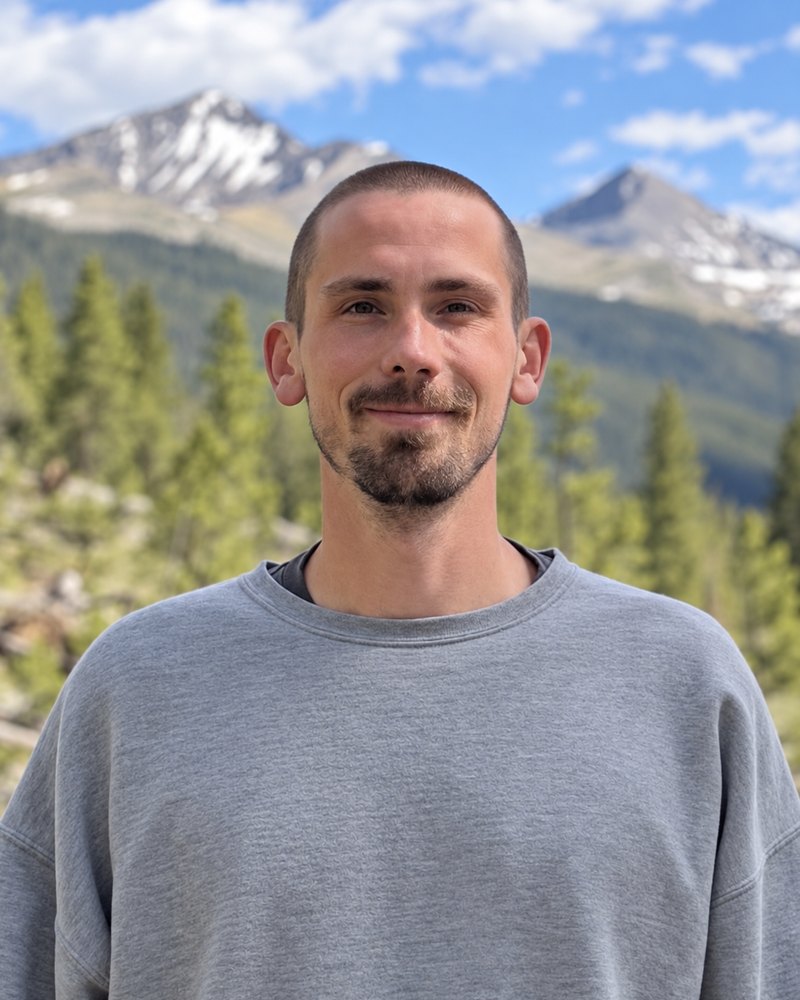
David Lagrange is a senior software engineer with seven years of building the systems businesses run on: a migration of a hundred thousand accounts for a wealth-management platform, a serverless ecommerce backend carrying three million records for a national nursery, payment batch systems, an LLM-powered financial assistant, and four years teaching software, data, and DevOps to the people who now build it. David architects the complex builds and takes the calls.
The engineering team is AI, and we say so plainly. It researches businesses, builds and tests, writes, and keeps the record of every client and every lesson, around the clock. It is the reason a company this small can build something for you before you have paid a cent.
- Based in Port Washington, Wisconsin, in Ozaukee County.
- In person around Milwaukee and Ozaukee County; by video and email anywhere in the United States.
- Stack, when it matters to you: TypeScript and Next.js, Python, C# and .NET, Java, PostgreSQL and the rest, AWS. Whatever your systems already speak.
The ones people actually ask.
I got an email from you with a link. Is this legitimate?
Yes. The email came from an address ending in lagrangesoftware.net, the link points at demos.lagrangesoftware.net, and the page is labelled as a concept made by us. Nothing is installed; like any web page, opening it leaves a line in the access log of the host. The full explanation is here.
Why did you build something for my business without asking?
Because a working version is a better first message than a pitch. It cost you nothing, it asked you for nothing, and it shows exactly what we saw and what we would do about it. If it is not useful, ignore it; it is not permanent, and we take it down sooner if you ask.
Did you use my photos, logo, or text?
Only what your business publishes, only to show your business what its own site or system could be, on an unlisted page that search engines are told not to index. It is labelled as a concept, and we take it down when you ask.
What does it cost to look, and what does the real thing cost?
Looking costs nothing. The finished work is priced in a written scope before it starts: fixed for a defined piece, by phase for a larger build, by the month for care plans, hosting and ongoing work.
Who owns the code?
You do, on payment in full, for everything made specifically for you. We keep our own tools and know-how, and open-source parts keep their licenses. It is written into the agreement you sign.
Do you only work in Wisconsin?
No. We are based in Port Washington and meet in person around Milwaukee and Ozaukee County, and we work with businesses anywhere in the United States by video and email.
How do I stop hearing from you?
Reply with the word “stop” to any email from us, or use the unsubscribe link at the bottom of it. Either one is recorded and we stop writing; a reply is the quicker of the two.
Tell us what you run.
A few sentences about your business and what is getting in the way. We answer every message, sometimes with something already built.